Elelife Inflatable Boat Reviews & Specifications

Elelife inflatable boat models are designed for recreational boating, fishing, lake activities, coastal exploration, and portable watercraft applications. The Elelife product lineup includes inflatable boat configurations built for easy transport, compact storage, and rapid setup while supporting a variety of passenger capacities and on-water use cases. This guide provides an overview of Elelife inflatable boat specifications, construction materials, inflation systems, capacity options, operating considerations, and available product categories. It also includes Elelife inflatable boat reviews, product comparisons, and information related to selected Elelife equipment and marketplace offerings.

✓ Field-verified specs✓ Built for continuous operation✓ Six product lines
Shop the Full Elelife Lineup on Amazon
Elelife Inflatable Boat
Heat-Welded Seams Throughout Heat-Welded Seams Throughout

Elelife inflatable boats use heat-welded PVC seams — not adhesive bonding. The weld fuses panels under heat and pressure, creating a structurally continuous joint that outlasts glued seams in UV exposure, saltwater, and repeated inflation cycles.

3 Independent Air Tubes 3 Independent Air Tubes

Each hull chamber is isolated — a single puncture doesn't deflate the entire boat. The remaining tubes keep the hull buoyant so you get back to shore rather than dealing with a boat that's sinking mid-water.

Aluminum Floor Supports Outboard Use Aluminum Floor Supports Outboard Use

5-panel aluminum flooring provides a rigid, flat deck for standing, fishing, and low-horsepower outboard attachment. Roll-up fabric floors flex under load — the aluminum floor is what makes motor use practical.

Verified by Buyers on Open Water Verified by Buyers on Open Water

Elelife inflatable boat reviews from verified purchasers confirm real-world use on lakes, rivers, and coastal applications — 4.0 stars across 36 reviews on the 10FT model, with buyers reporting reliable performance in both freshwater and saltwater environments.

12 Elelife Products Worth Looking At First

These are the products that show up most often in real purchase decisions — the rotary drum filters that koi keepers are running month after month, the aerators with the review counts that come from actual backyard pond owners, and the boat and sauna gear that buyers reach for when they've done the spec comparison and want something that won't need replacing in a season. Every category is represented below.

elelife 10FT Inflatable Boat
inflatable boat

10FT Inflatable Boat 3-Person

See on Amazon
Elelife 7.5FT Inflatable Boat 2-3 Person
inflatable boat

7.5FT Inflatable Boat 2-3-Person

See on Amazon
Sauna Heater
sauna heater

9KW Sauna Heater Split

See on Amazon
Sauna Heater
sauna heater

9KW Sauna Heater Integrated

See on Amazon
15000GPH-550W
submersible water pump

15000GPH Pond Pump 550W

See on Amazon
9KW Commercial Self-Draining Steam Generator Shower System Home Steam Bath Spa Generator 30 min to 12 Hours with Auto Drain 95-131℉ for Suitable Space Heating 9 m³/318 Cubic feet (Steam-Showers)
steam generator

9KW Steam Generator Auto-Drain

See on Amazon
Rotary Drum Filter
rotary drum filter

4000GPH RDF Standard Edition

See on Amazon
Rotary Drum Filter
rotary drum filter

8000GPH RDF Advanced Edition

See on Amazon
1HP Sewage Grinder Pump Submersible Effluent Pump
submersible water pump

1HP Sewage Grinder Pump

See on Amazon
Pond Fountain Aerator (8000GPH)
pond fountain aerator

8000GPH RGB Fountain Aerator

See on Amazon
RGB Pond Fountain Aerator
pond fountain aerator

20000GPH RGB Floating Aerator

See on Amazon
Pond Fountain Aerator
pond fountain aerator

10000GPH White LED Aerator

See on Amazon
inflatable boat

10-Foot Inflatable Boat with Heat-Welded Seams

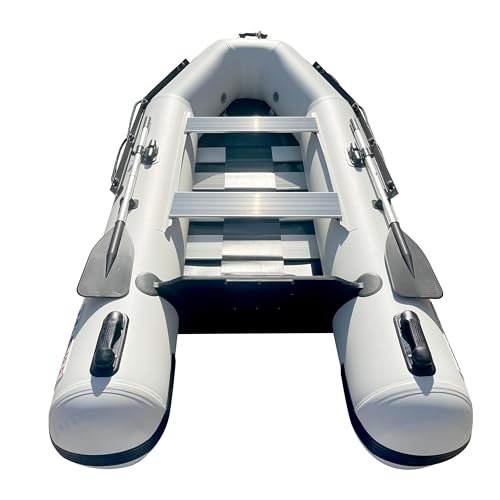
The Elelife 10FT Inflatable Boat is a 2–3 person craft at 58 pounds with three independent air tubes, five aluminum floor panels, and two aluminum seat boards. Seams are heat-welded rather than glued — the construction method that survives both UV exposure and saltwater better than adhesive-bonded alternatives. A paddle and air pump are included. The cylindrical tail design supports outboard motor attachment for low-horsepower lake and protected coastal use. It's not a high-speed offshore vessel, but it fits in a truck bed, inflates without special equipment, and doesn't need a trailer.

What to look for

  • Seam construction — heat-welded seams are the primary durability differentiator in inflatable boats; they bond the PVC panels under heat and pressure rather than adhesive, which holds up better under repeated flexing and UV degradation
  • Air chamber count — 3 independent tubes mean a single puncture doesn't sink the boat; the remaining chambers keep the hull buoyant while you get back to shore
  • Aluminum floor panels vs. roll-up floor — 5-panel aluminum flooring provides a rigid deck that supports outboard mounting and makes standing to cast possible; a roll-up fabric floor flexes underfoot and won't support meaningful motor use
  • Weight and packed size — at 58 pounds, the boat fits in a truck bed or SUV cargo area without a roof rack or trailer; confirm you have a way to carry it from vehicle to water launch

In this category

  • 10FT Inflatable Boat 3-Person — The only inflatable in the Elelife lineup: 2–3 person capacity, 3 independent air tubes, 5 aluminum floor panels, heat-welded seams rated for fresh and saltwater, with paddle and pump included.

Why Seam Construction Decides How Long It Lasts

Seam failure is the most common reason inflatable boats get replaced after one or two seasons. It's not random — it's predictable based on how the hull panels were bonded during manufacturing. Heat-welded seams and adhesive-bonded seams look similar on a new boat. They behave very differently after 18 months of UV exposure, temperature cycling, and salt or chlorinated water contact.

Heat-Welded vs. Glued Seams

Adhesive-bonded seams use a contact cement to join PVC panels together. The bond is strong initially, but the adhesive degrades under prolonged UV exposure, and repeated inflation and deflation cycles work the joint constantly. In saltwater, the salt crystals that form as water evaporates from the seam line accelerate the breakdown. The result is delamination — usually starting at a seam corner or stress point — that can happen suddenly when you're on the water.

elelife 10FT Inflatable Boat

Heat-welded seams fuse the PVC material itself under heat and pressure rather than bonding two surfaces with an intermediate adhesive. The weld line becomes structurally continuous with the surrounding material. There's no adhesive layer to degrade, no bond to break down from UV, and the seam handles the flex stress of inflation cycles better over time. The Elelife 10FT Inflatable Boat uses heat-welded seams throughout and is rated for both freshwater and saltwater environments — meaning the construction is specifically designed to handle the conditions where adhesive seams typically fail.

Honest caveat: no inflatable lasts indefinitely regardless of seam construction. UV exposure is cumulative. If you leave an inflatable boat inflated and uncovered in direct sun for months on end, you'll shorten its life considerably. Deflating it for storage, keeping it out of direct UV when not in use, and rinsing saltwater off before storage — those habits extend useful life significantly beyond what construction alone can deliver.

What 3 Independent Air Tubes Actually Mean

The Elelife 10FT boat uses 3 independent air tubes rather than a single continuous hull chamber. Each tube is isolated — meaning a puncture in one chamber doesn't depressurize the others. The remaining two chambers keep the hull buoyant. You slow down, you lose some stability, but you get back to shore rather than dealing with a boat that's sinking at the bow while you're 200 yards out.

Single-chamber inflatables are common at lower price points. They're cheaper to build. But a single puncture — from a submerged branch, a dock cleat, a fishhook — results in immediate total loss of buoyancy. Multi-chamber design is a genuine safety feature, not a marketing point.

Why the Aluminum Floor Matters for Outboard Use

The 5-panel aluminum floor system in the Elelife 10FT boat provides a rigid, flat deck surface. That rigidity does two things: it gives you a stable platform for standing while fishing, and it distributes outboard motor thrust evenly across the hull rather than concentrating stress at the transom attachment point.

Roll-up fabric floors — common in budget inflatables — flex underfoot, which makes standing uncomfortable and reduces stability when weight shifts. More critically, they don't support outboard motor use well at any meaningful speed because the hull deforms under thrust load rather than holding its shape. The aluminum floor is what makes the difference between a boat you can put a small motor on and one that's restricted to rowing and drifting. At 58 pounds including the aluminum seating and floor panels, the weight is real — but it's the weight of equipment that actually does its job.

rotary drum filter

Elelife RDF Filters That Actually Run Hands-Free

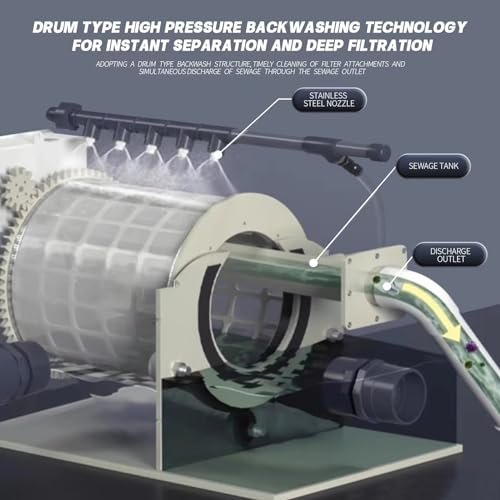
Three rotary drum filter models — a 4000 GPH Standard Edition and two Advanced Editions at 4000 and 8000 GPH — all use fully automatic pressure-triggered backwash rather than a fixed timer. When the drum screen loads with fish waste and suspended solids, the inlet water level rises, the liquid-level sensor triggers, and the backwash cycle runs automatically. All metal components across the line are 304 stainless steel; the chassis is PP board rated for outdoor sun exposure. The 4000 GPH Standard Edition produces 8000 gallons of output per hour — enough for ponds up to roughly 8,000 gallons when run continuously. The Advanced Edition models add a UV lamp to the package.

What to look for

  • Pond volume in gallons — Elelife's general recommendation is that the filter's hourly flow rate should match the total pond volume; at a minimum, the drum should turn over the full volume once per hour
  • Fish stocking density — a lightly stocked ornamental pond triggers fewer backwash cycles than a heavily fed koi pond running 5–6 daily feedings; size up if you feed heavily
  • UV lamp requirement — the Standard Edition ships without a UV lamp; both Advanced Editions include one, which handles biological pathogens the mechanical drum screen alone can't address
  • Water replenishment plan — every RDF loses 10–30 gallons per day through backwash discharge; install an automatic water replenishment valve before startup, not after
  • Pipe diameter compatibility — inlet is 2½ inches, outlet is 4 inches, sewage port is 1½ inches across all three models; verify your existing plumbing matches before ordering

In this category

  • 4000GPH RDF Standard Edition — The entry-level model at 34 pounds with 8000 GPH output capacity, 304 SS metal components, PP chassis, and automatic pressure-triggered backwash — the most-reviewed RDF in the lineup at 3.9 stars with 18 reviews.
  • 8000GPH RDF Advanced Edition — The flagship at 36×20×23 inches with 8000 GPH flow, 304 SS construction, and a UV lamp included — handles larger ponds up to roughly 8,000 gallons per the continuous-turnover guideline.
  • 4000GPH RDF Advanced Edition — The mid-tier option at 42.3 pounds with 304 SS construction and UV lamp included; dimensions at 23×30×20 inches suit installations with more horizontal than vertical clearance.

How to Set Up the Elelife Rotary Drum Filter

Rotary Drum Filter

Getting an RDF running correctly the first time comes down to three things most buyers miss: proper pump placement, a water replenishment plan, and understanding what the backwash cycle actually does. The filter itself ships with the controller pre-set to automatic mode — but "automatic" only works if the plumbing and water supply are configured correctly before you plug it in.

Step 1: Pump Placement and Inlet Connection

Submerge your pond pump fully in the deepest section of the pond where waste accumulates — typically near the bottom, away from the waterfall or return jet. Connect the pump outlet to the RDF inlet using pipe no smaller than the factory-supplied 2½-inch diameter. Reducing the inlet pipe diameter forces the pump to work against back-pressure and will cause the inlet bin water level to rise constantly, triggering the backwash cycle continuously rather than only when the drum screen is actually loaded.

The outlet pipe — 4-inch diameter — flows by gravity back to the pond with no restriction. Don't reduce it. Don't add a valve. The outlet needs to drain freely or the filter will constantly read a high water level and misfire its backwash trigger. The 1½-inch sewage port connects to a drain or a collection container — more on that in a moment.

Step 2: Install an Automatic Water Replenishment Valve First

This is the step the product listing flags clearly, and the one most first-time RDF owners skip. Every backwash cycle flushes 10–30 gallons of waste water out the sewage port. On a heavily fed koi pond running 5–6 daily feedings, the filter may cycle 2–4 times per day. Over a week, that's 70–840 gallons of pond water lost to backwash discharge. Without an automatic float valve on your pond's water supply, you'll either be topping up manually every few days or running the risk of the pump pulling air when the water level drops below the intake.

A ball-float water level controller connected to your garden hose or irrigation line costs very little and handles this automatically. Set it about 2 inches below the pond's normal operating level so it only activates when water has been lost to backwash cycles — not constantly running to compensate for evaporation.

Step 3: Understand the Backwash Trigger

Elelife's RDF uses a pressure-differential trigger, not a fixed timer. When debris loads the drum screen and slows water flow through it, the inlet bin water level rises. Once it reaches the liquid-level sensor, the controller automatically activates the backwash spray bar, which runs until the screen is clean and the level drops. This is meaningfully different from timer-based backwash systems that run on a schedule regardless of whether the drum actually needs cleaning — pressure-triggered cycles only fire when required, which is why units with this mechanism accumulate the long continuous-run reports from koi keepers that timer-based units don't.

The one honest caveat worth knowing: approximately 2% of backwash waste ends up splattered on the interior walls of the filter housing rather than exiting cleanly through the sewage port. This is documented in the product listing and confirmed by users in forum discussions. It's not a malfunction — it's a characteristic of the spray bar design. A quick rinse with a garden hose every few months cleans the interior walls without needing to disassemble anything. The stainless steel nozzles can be unthreaded and cleaned individually if they become blocked.

What to Expect in the First Two Weeks

During the first 7–14 days, the drum screen is clean and water passes through freely — backwash cycles will be infrequent or nonexistent. As biofilm establishes on the screen mesh and waste accumulates, cycling frequency increases to reflect actual pond bioload. Don't assume the filter isn't working if it doesn't backwash immediately. Conversely, if it's cycling more than 6–8 times daily after the first month, check your pump's GPH output against the filter's capacity — the 4000 GPH Standard Edition outputs 8,000 gallons per hour, but the incoming pump needs to match that flow rate to avoid overloading the drum.

One more thing: never start the filter dry. The product documentation is explicit — power it on only after all pipes are filled and water is flowing through the system. Starting the backwash pump dry burns out the cleaning pump motor. Fill the pipes, confirm flow, then plug in the controller.


sauna heater

9KW Sauna Heaters for Rooms up to 459 Cu.Ft

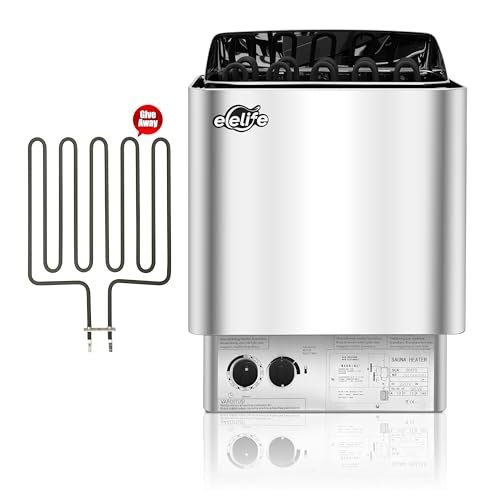
Both Elelife sauna heaters run at 9KW and 220–240V, covering sauna rooms from 317 to 459 cubic feet — roughly a 7×8×8-foot to an 8×9×8-foot room with standard insulation. The difference between models is cabinet configuration: the Integrated machine combines all components in one unit; the Split machine separates the control panel from the heating cabinet, which suits installations where the controller needs to be mounted away from the stones. Both require 7AWG wiring and a 48–54A dedicated circuit breaker. Neither includes a plug — external wiring and an air switch are purchased separately. Sauna stones (33 lbs needed) are not included with either model.

What to look for

  • Room cubic footage — measure length × width × ceiling height; the 9KW output targets 317–459 cubic feet, roughly equivalent to a room in the 7×8 to 8×9 footprint range with 8-foot ceilings
  • Electrical circuit availability — both models require a dedicated 220–240V circuit with 7AWG wire and a 48–54A breaker; if your sauna room doesn't have this, budget for an electrician before purchasing
  • Cabinet configuration — integrated suits installations where the controller and heater mount in the same location; split suits rooms where the controller needs to be positioned at a different height or wall
  • Sauna stones — 33 lbs required for either model, sold separately; stones are not included in the box

In this category

  • 9KW Sauna Heater Integrated — Single-cabinet design at 16.1×10.6×22 inches with aluminized zinc shell, 304 SS heating element, 3-hour timer, maximum temperature of 230°F, and wall-mount bracket included.
  • 9KW Sauna Heater Split — Same 9KW output and 317–459 cubic foot coverage with a split-machine configuration that separates the heating unit from the external digital controller; temperature range 95°F–230°F.

Sauna Room Sizing and the 240V Requirement

Both Elelife 9KW sauna heaters require a dedicated 220–240V electrical circuit — not a standard 120V household outlet. This is not a minor footnote. If your sauna room isn't already wired for 240V, you'll need a licensed electrician to run a new circuit before installation. Skipping that step isn't an option, and discovering it after the heater arrives creates a frustrating delay. Get the electrical assessment done before you order.

Sauna Heater

Calculate Your Room's Cubic Footage First

The sizing rule for electric sauna heaters is approximately 1 kW per 45–50 cubic feet of room volume, assuming standard wood construction with proper insulation. To get your room's cubic footage: multiply length (feet) × width (feet) × ceiling height (feet).

The Elelife 9KW heaters are rated for rooms from 317 to 459 cubic feet. In practical terms, that covers:

  • A 7 × 8-foot room with 8-foot ceilings — 448 cubic feet (within range, but at the upper end)
  • A 6 × 8-foot room with 7-foot ceilings — 336 cubic feet (well within range)
  • A 5 × 7-foot room with 8-foot ceilings — 280 cubic feet (below the rated minimum; size down or confirm insulation quality)

If your room has concrete walls, exterior-facing walls with minimal insulation, or a door with significant air gaps, effective cubic footage rises — meaning the 9KW output covers less space than the rated range suggests. Conversely, well-insulated interior rooms with quality sauna doors often perform at the lower end of the range comfortably. The 200-rule that circulates in sauna communities — temperature plus humidity should equal around 200°F — is a target for session quality, not a sizing formula. Use cubic footage for sizing, then adjust your rock bed and session temperature to dial in the experience.

The 240V Electrical Requirements in Plain Terms

Both heater models draw 40.91 amps at 220–240V. The product listing specifies 7AWG wire and a 48–54A breaker. Here's what that means practically:

  • Wire gauge: 7AWG copper wire — thicker than the 10AWG or 12AWG used on most 120V household circuits. Standard household wiring won't carry this load safely.
  • Breaker size: 48–54A dedicated circuit breaker at your electrical panel. Most residential panels have spare slots, but some older panels don't — your electrician will assess this during the site evaluation.
  • Dedicated circuit: The heater requires its own circuit — no other loads sharing the breaker. Running it on a shared circuit creates both a safety hazard and operational issues.
  • No plug included: Neither model includes a plug. The heater connects directly to the wiring via an air switch purchased separately. This is a hardwired installation, not a plug-in appliance.

The cost to have an electrician run a new 240V dedicated circuit varies significantly by home, panel location, and local labor rates. Factor this into your total project budget before purchasing. It's not an obstacle — it's a standard electrical job — but it's not free and it's not something to skip.

Integrated vs. Split Configuration

The practical difference between the two models comes down to where you want the controller. The Integrated machine (B0FPFT11NX) mounts on the wall with the control knobs on the unit itself — simple, self-contained, best when the heater is at a convenient height for operation. The Split machine (B0FPFVD86V) separates the external digital controller from the heating cabinet, which suits rooms where the heater mounts low (the listing recommends 3.5 inches off the floor) but you want the controls at eye level or outside the sauna room entirely. Same 9KW output, same room coverage, same electrical requirements — the configuration is purely about installation preference and control panel placement.

Neither model includes sauna stones. Both require 33 pounds of stones to fill the stone basket. Budget for those separately — they're available on Amazon alongside the heaters.

Questions Buyers Ask Across All Elelife Lines

What is the Elelife inflatable boat and who is it for?

The Elelife inflatable boat is a portable, recreational watercraft designed for fishing, lake use, river trips, and coastal exploration. Available in 7.5FT (2–3 person, 55 lbs) and 10FT (2–3 person, 58 lbs) configurations, both models feature heat-welded PVC seams, aluminum floor panels, and independent air tubes — built for buyers who need a boat that fits in a truck bed or SUV cargo area and inflates without special equipment. The lineup targets anglers, casual boaters, and outdoor users who want real on-water capability without a trailer or storage facility.

What do Elelife inflatable boat reviews say about real-world performance?

Elelife inflatable boat reviews from verified Amazon purchasers report reliable use across freshwater lakes, rivers, and protected coastal areas. The 10FT model holds a 4.0-star average across 36 reviews, with buyers citing the rigid aluminum floor, sturdy seam construction, and included paddle and pump as consistent positives. Common review themes include ease of inflation, stability during fishing, and the boat's ability to fit outboard motors for low-speed lake use. Critical reviews mention that at 58 lbs the boat is heavier than single-chamber alternatives, which is expected given the aluminum floor and multi-chamber hull design.

What are the key specs of the Elelife 10FT inflatable boat?

The Elelife 10FT inflatable boat (ASIN B0DZHRB68D) specs: 2–3 person capacity, 58 lbs packed weight, 3 independent air tubes for multi-chamber safety, 5-panel aluminum floor system for a rigid deck, 2 aluminum seat boards, heat-welded PVC seams rated for freshwater and saltwater, cylindrical tail for outboard motor attachment, paddle and air pump included. No disassembly of the floor panels is required for inflation — the floor assembles without tools. Suitable for lakes, rivers, bays, and protected coastal use with a low-horsepower outboard.

What are the specs for the Elelife 7.5FT inflatable boat?

The Elelife 7.5FT inflatable boat (ASIN B0DSVX6NQK) specs: 2–3 person occupancy, 55 lbs weight, white PVC construction with heat-welded seams, aluminum seat boards and floor panels, paddle and air pump included. At 55 lbs and 7.5 feet it's slightly more compact than the 10FT model — better suited for single users or tight storage situations. The same multi-purpose use case applies: fishing, lake activities, river use, and emergency tender applications. Available on Amazon via the Elelife store with a 4.0-star rating.

How does the Elelife inflatable boat compare to other brands at the same price?

The main differentiators for the Elelife inflatable boat versus budget alternatives in the same price range are seam construction and floor type. Most sub-$300 inflatables use adhesive-bonded seams and roll-up fabric floors. Elelife uses heat-welded seams (more durable long-term) and aluminum floor panels (required for stable outboard use). Compared to brands like Intex or Sea Eagle at similar price points, Elelife's aluminum floor gives it a meaningful advantage for fishing and motor use — at the cost of slightly higher packed weight. For buyers prioritizing portability above durability, lighter fabric-floor boats are an option; for buyers who want a real fishing or motor platform, the aluminum floor construction is worth the weight.

Does the Elelife inflatable boat work with an outboard motor?

Yes — the Elelife 10FT inflatable boat is designed with a cylindrical tail that supports low-horsepower outboard motor attachment. The 5-panel aluminum floor is the critical enabler here: it distributes motor thrust across the hull rather than concentrating stress at the transom, and it provides a rigid deck for stable operation under power. Recommended motor size is 2–4HP for the 10FT model. Attaching a motor typically triggers state registration requirements — check your local boating authority rules before running a motor on public waterways.

Is the Elelife inflatable boat available on Amazon — and is there an affiliate marketplace link?

Yes — both Elelife inflatable boat models are sold through the Elelife Amazon storefront. The 10FT 3-person model is at B0DZHRB68D and the 7.5FT 2-3-person model is at B0DSVX6NQK. All product links on this site use the Elelife affiliate tag (elelife-20) as part of the Elelife marketplace and Amazon Associates program. Purchasing through these links supports the site at no additional cost to you. Both models ship with paddle and pump included; Prime shipping is available depending on inventory.

How many hours a day should you run a pond aerator?

For ponds with fish, continuous 24-hour operation is the standard recommendation — oxygen depletion happens fastest overnight when photosynthesis stops and biological oxygen demand continues. A timer-controlled aerator like Elelife's 8000GPH or 10000GPH models can run on a schedule, but if your pond is stocked with koi, running the aerator through the night is more important than running it during the day. Shutting it off for more than 4–6 hours in warm weather creates real oxygen stress risk.

Is a pond fountain actually good at aerating?

A floating fountain aerator that breaks the water surface and sprays water into the air does aerate — but primarily in the top 12–18 inches of the water column. Elelife's aerators at 8000 to 20000 GPH move significant surface water volume, which oxygenates effectively for ponds up to moderate depth. For ponds deeper than 8–10 feet, surface aerators alone won't address oxygen depletion at the bottom. Pairing a surface aerator with a bottom diffuser system covers stratified deep ponds more completely.

What are the disadvantages of rotary drum filters?

The two practical drawbacks of RDF systems — including the Elelife models — are water loss through backwash discharge and the ~2% of waste that splatters on interior filter walls rather than exiting cleanly. The water loss (10–30 gallons per backwash cycle, multiple cycles per day under heavy feeding) requires an automatic water replenishment valve to manage. The interior wall splatter requires periodic rinsing. Neither is a dealbreaker, but both require planning before installation rather than after.

Can you have too much filtration in a koi pond?

Mechanically, no — more filtration capacity than your bioload requires simply means fewer backwash cycles and longer intervals between maintenance. Where buyers sometimes go wrong is oversizing the pump feeding the filter relative to the drum's capacity, which can cause continuous backwash cycling. The Elelife RDF's general recommendation is that the incoming pump GPH should match the pond volume — turning the water over once per hour — not exceeding the drum's rated output.

What is the life expectancy of an inflatable boat?

With proper construction and maintenance, a quality inflatable boat typically lasts 10–15 years or more. The key factors are seam construction (heat-welded seams outlast adhesive-bonded seams significantly), UV exposure management, and storage practices. The Elelife 10FT Inflatable Boat uses heat-welded seams throughout. Deflating for storage, rinsing salt water off after use, and keeping the boat out of direct UV when not in use will extend useful life considerably beyond the one-to-two seasons common with single-chamber, glued-seam alternatives.

Do you need a permit for an inflatable boat?

It depends on your state and how the boat is powered. In most US states, an unpowered inflatable under 12 feet requires no registration or permit for use on public waterways. Attaching an outboard motor typically triggers registration requirements, and Coast Guard safety equipment rules — life jackets, a sound-producing device — apply regardless of power source. Check your specific state's boating authority requirements before launching with a motor attached.

Is 120 or 240 volts better for a sauna heater?

For any sauna heater above roughly 4.5 kW, 240V is the practical requirement — not a preference. At 9 kW, the Elelife sauna heaters draw 40.91 amps. Running that load on a 120V circuit would require over 75 amps, which no standard residential circuit can supply. Both Elelife 9KW models require a dedicated 220–240V circuit with 7AWG wiring and a 48–54A breaker. This isn't optional — it's a basic electrical safety and functionality requirement.

What is the lifespan of a sauna heater?

Electric sauna heaters typically last 10–20 years with proper use. The main failure points are heating elements and stone corrosion from excessive water poured directly on stones. Elelife's 9KW heaters use 304 stainless steel heating elements with an aluminized zinc shell for corrosion resistance — the right materials for a high-humidity environment. Following the stone load specification (33 lbs) and not overfilling the stone basket preserves heating element life over the long term.

What are common problems with submersible water pumps?

The most common failure modes are dry-running (running without water, which destroys the motor), impeller clogging from debris, and seal failure in pumps not rated for continuous submersion. The Elelife 1HP Sewage Grinder Pump addresses dry-running with an automatic float switch that shuts the pump off when water drops below the threshold. The 15000GPH Pond Pump 550W addresses it with an auto-shutdown triggered by impeller blockage, and carries an IPX8 rating for continuous submersion.

Does a pond pump need to run 24 hours a day?

For koi ponds with a rotary drum filter, yes — the RDF requires continuous water flow to function. Shutting the pond pump off overnight stops filtration and allows ammonia and solids to accumulate while the filter drum sits idle. The 15000GPH Pond Pump 550W is designed for continuous operation as part of a filter loop. For purely decorative ponds without fish, running the pump on a timer to reduce electricity use is more practical.

What are common problems with steam generators?

Mineral scale buildup on heating elements is the most frequent long-term issue — caused by hard water leaving calcium and magnesium deposits after each session. Units without auto-drain systems require manual flushing to prevent this. The Elelife 9KW Steam Generator's built-in auto-drain purges residual water after each session automatically, which is specifically designed to prevent scale accumulation. The second common issue is insufficient steam output, almost always caused by an inadequately sealed enclosure bleeding steam faster than the generator can produce it.

Is a steam generator worth it for a home shower?

For a properly sealed steam shower enclosure in the right size range, yes — the daily usability of a home steam shower is significantly higher than gym or spa alternatives when the installation is done correctly. The Elelife 9KW unit covers up to 318 cubic feet, produces steam in approximately one minute via QuickStart technology, and includes the steamheads, control panel, and plumber-ready connection kit in the box. The honest caveat: installation requires both a licensed electrician for the 240V circuit and basic plumbing work for the water supply connection.

What Elelife Buyers Say After Real-World Use

"I put the 15000GPH 750W RGB Aerator in my half-acre ornamental lake about four months ago. The 100-foot cord was the deciding factor — my outlet is at the far edge of the property and every other unit I looked at came up short. The RGB modes through the app are genuinely fun. Spray height is solid even when the wind kicks up. My only gripe is that the app connection occasionally drops and needs a restart, but the remote control handles everything I need anyway."
— Karen L., Pond Aesthetics Owner, on pond fountain aerator
"Running the 8000GPH RGB Fountain Aerator in a 3,800-gallon koi pond since spring. Algae dropped noticeably in the first three weeks — I could see the difference in water clarity before I even tested oxygen levels. Setup took under 10 minutes. The time controller lets me shut it down after dark when I don't want the lights, which is a nice option. Cord length is right for my placement near the center of the pond."
— David M., Serious Koi Keeper, on pond fountain aerator
"I was skeptical of any Amazon drum filter after burning through two cheap canister filters that required daily cleaning. The 4000GPH RDF Standard Edition changed my thinking. It's been running five months straight on a 6,000-gallon pond where I feed four times a day. Backwash fires automatically — I haven't had to do anything except top off the pond water. There's some splatter on the interior walls that needs a rinse every few months, but that's it."
— Tom B., Serious Koi Keeper, on rotary drum filter
"The 1HP Sewage Grinder Pump replaced a standard sump pump that kept jamming on the solids in my basement pit. The float switch automation is exactly what I needed — it kicks on, clears the water, shuts off, and I don't think about it. The 32-foot cord reaches my outlet without an extension cord. Only thing I'd flag: the pump body is genuinely heavy at 31 pounds, so having a second person available for installation in a deep sump basin makes the job much easier."
— Ray S., Homeowner, on submersible water pump
"I built a 7×8-foot basement sauna and the 9KW Sauna Heater Integrated hits temperature in about 35 minutes from cold. The wall-mount bracket install was straightforward. Getting the 240V circuit run by an electrician added two weeks to the project timeline and cost more than I budgeted for — wish I'd planned that part earlier. But the heater itself does exactly what it's supposed to do. Hits 190°F without straining, holds it through a full session."
— Jeff H., Home Sauna Builder, on sauna heater
"We use the 10FT Inflatable Boat 3-Person as a fishing tender on a freshwater reservoir. The aluminum floor is what makes it work — you can actually stand and cast without feeling like the hull is shifting under you. Heat-welded seams have held through a season of rocky shoreline launches. At 58 pounds it's a two-person carry from the truck to the water, which is worth knowing before you show up solo. Inflates in about 12 minutes with the included pump."
— Aaron P., Weekend-on-Water Boater, on inflatable boat

How Elelife Built Six Lines Around One Principle

Elelife didn't start as a wellness brand or a pond brand. The product lineup reads the way it does — floating aerators, rotary drum filters, sauna heaters, a steam generator, submersible pumps, an inflatable boat, and a steering kit — because each line emerged from the same operational question: what does someone who actually uses this equipment need it to do? The pond fountain aerator line came first in terms of market visibility, building on a straightforward premise that serious pond owners want real GPH output and functional aeration, not just a decorative water feature. The RGB LED system wasn't a gimmick layered on afterward — it was designed into the aerator because there's no functional reason a working aerator can't look good doing its job at night.

The rotary drum filter line followed the same logic. Koi keepers running heavily stocked ponds had two options before value-tier RDF units became available on Amazon: spend 3–5x more on European systems from brands like OASE or manage the daily hands-in-the-water maintenance of canister filters and UV clarifiers that couldn't keep up with real bioload. Elelife's RDF line — three models from 4000 to 8000 GPH with fully automatic pressure-triggered backwash and 304 stainless steel construction throughout — was built to close that gap. The submersible pump line extends naturally from the filtration category: the 550W ceramic-shaft pond pump at 15,000–18,000 GPH is explicitly designed as the companion feed pump for the RDF system, and the 1HP sewage grinder addresses the entirely different but equally practical problem of basement drainage and waste removal. The sauna heater and steam generator lines share the same design philosophy — 9KW output, 304 stainless steel heating elements, auto-drain on the steam generator, and honest electrical requirements stated upfront rather than buried in the documentation. The inflatable boat and planetary gear steering kit round out the catalog for buyers managing watercraft rather than water quality: a 10-foot heat-welded aluminum-floor boat and a complete rotary steering upgrade that ships as a ready-to-install kit.

What ties these six lines together isn't a brand narrative — it's a consistent approach to specs. Every GPH rating, kW output, head height, cubic footage range, and material designation across the catalog is drawn from measurable product data. That's not a marketing position. It's the practical minimum for a brand selling to pond keepers, sauna builders, and anglers who will find out within a season whether a number was real. Elelife products are sold on Amazon.com, which means the review record is public and the feedback loop is short. The lines that have accumulated community run-time — the RDF with documented 5–6 month continuous operation reports, the aerators with 40+ reviews from actual backyard pond owners — have earned that standing by doing the job they're rated for.

See the Elelife Inflatable Boat on the Water

This walkthrough goes beyond the product listing — you'll see the Elelife inflatable boat being set up, inflated, and used on actual water, which gives you a much more accurate picture than spec sheets alone. The video covers the inflation process, floor panel assembly, stability on the water, and what the boat handles like under real conditions. If you're deciding between the 7.5FT and 10FT model, or trying to figure out whether the aluminum floor and heat-welded seams make a difference in practice, this is the most useful reference available. The setup is straightforward enough that most buyers complete it without instructions — and the video confirms that.

Useful Guides

Marcus answers the questions that come up before and after the purchase, from pond sizing to sauna wiring to why your last pump failed.

About Elelife

Elelife produces water management and home wellness equipment across six product lines — pond fountain aerators, rotary drum filters, submersible pumps, sauna heaters, a steam generator, an inflatable boat, and a boat steering kit. All products are available on Amazon.com through the official Elelife storefront. Product questions specific to a line — GPH sizing, sauna room cubic footage, RDF pipe compatibility — are answered in the education sections on this site and in the Amazon Q&A sections on each product listing.

Customer Support

All Elelife products are sold and fulfilled through Amazon.com. For questions about a specific order — shipping status, delivery issues, returns, or replacements — Amazon customer service handles those directly through your account order history. For product-specific technical questions before purchase, the Q&A section on each Amazon listing is monitored and often has answers from both the brand and previous buyers.

Warranty and Returns

Warranty terms vary by product line — the 1HP Sewage Grinder Pump (B0DP4FG79T) specifies a two-year warranty in the product listing; other Elelife products list warranty terms individually on their Amazon pages. Amazon's standard return window applies to all purchases. Check the specific product listing for the warranty description before purchasing, as terms are not uniform across the full catalog.